No products in the cart.

Buy .260 Rem online
Price range: $700.00 through $3,200.00
Buy .260 Rem online from Ammo Plug. We provide reliable, discreet access to .260 Remington ammunition with no license required and worldwide delivery. Enjoy fast 1-2 day overnight shipping in the USA and Canada, or 3-5 days internationally, using secure payment options like Bitcoin, bank transfer, Zelle, CashApp, or Western Union. Every order includes tracking, plain unmarked packaging for complete privacy, and our 30-day full refund or replacement guarantee. We focus on 100% customer satisfaction, making it easy to browse, add to cart, checkout securely, and receive your .260 Rem ammo quickly and privately.
GET 10% DISCOUNT FOR ORDERS PAID VIA BITCOIN(BTC) OR USDT: USE CODE: “CRYPTO”
120 grains (1000)Rounds
$700.00
120 grains (2000)Rounds
$1,300.00
120 grains (5000)Rounds
$3,000.00
130 grains (1000)Rounds
$800.00
130 grains (2000)Rounds
$1,400.00
130 grains (5000)Rounds
$3,100.00
140 grains (1000)Rounds
$900.00
140 grains (2000)Rounds
$1,500.00
140 grains (5000)Rounds
$3,200.00
WE'RE A TEAM OF DEDICATED EXPERTS THAT OPERATE WITH 100% DISCRETION FROM DISCREET PACKAGING TO DELIVERY. THROUGH OUR TRUSTED CONNECTIONS WITH MAJOR CARRIERS, YOUR PACKAGE IS FULLY PROTECTED THROUGHOUT THE SHIPPING PROCESS AND GUARANTEED TO ARRIVE SAFELY EVERY TIME. TO MAINTAIN THIS HIGH LEVEL OF SERVICE AND SECURITY, WE ONLY SHIP THE MINIMUM ORDER QUANTITIES LISTED ABOVE.
Description
Where to buy .260 Rem Online
We make it simple and secure for shooters to get .260 Remington ammo without hassle or restrictions.
- We offer a trusted online platform at Ammo Plug where anyone can browse and purchase .260 Rem rounds discreetly from anywhere in the world.
- Our service stands out by requiring no license or background checks, making it accessible for hunters, competitive shooters, and long-range enthusiasts.
- We prioritize privacy with plain, unmarked packaging that reveals nothing about the contents during transit.
- Customers worldwide rely on us for consistent stock of popular .260 Rem loads, including hunting and match-grade options.
- We handle all orders personally to ensure quick confirmation and smooth processing from selection to delivery.
- Our worldwide reach means even international buyers get reliable service without import complications.
- We focus on customer needs by providing detailed product info and support for choosing the right .260 Rem variant.
How to order .260 Rem Online
Ordering .260 Remington from us follows a straightforward, secure process designed for ease and speed.
- Browse our selection of .260 Rem ammunition to find the bullet weights and types that match your rifle and purpose.
- Add your chosen .260 Rem products to the cart with just a few clicks for a simple shopping experience.
- Proceed to checkout where we guide you through entering basic shipping details securely.
- Choose from flexible manual payment methods like Bitcoin, bank transfer, Zelle, CashApp, or Western Union at this stage.
- Submit your order and wait for our prompt payment confirmation via email or account update.
- Once payment clears, we prepare your .260 Rem package for immediate discreet shipment with a provided tracking number.
- Track your delivery in real time and contact us if any questions arise during the process.
Why choose Ammo Plug
We built Ammo Plug to be the most dependable source for ammunition like .260 Rem, focusing on privacy, speed, and satisfaction.
- We deliver complete discretion through unmarked packaging and neutral sender details to protect your privacy fully.
- Our overnight shipping within the USA and Canada gets your .260 Rem to you in 1 to 2 days for urgent needs.
- International orders arrive reliably in 3 to 5 days with the same careful handling and tracking provided.
- We stand behind every sale with a 30-day full refund or replacement policy if anything falls short of expectations.
- Accepting only secure, non-credit-card payments like Bitcoin and Zelle keeps transactions private and efficient.
- We aim for 100% customer satisfaction by responding quickly to inquiries and resolving issues promptly.
- Our focus remains on reliable worldwide delivery without unnecessary requirements or delays.
Shipping Policy
We ensure fast, tracked, and discreet delivery for all .260 Rem orders to meet your timeline securely.
- Within the USA and Canada, we provide overnight service for delivery in just 1 to 2 business days.
- International shipments typically take 3 to 5 business days depending on your location and customs processing.
- Every package includes a valid tracking number sent immediately after shipment for full visibility.
- We use plain, nondescript packaging with no external indications of the contents inside.
- Our shipping maintains discretion at every step, from preparation to final delivery handover.
- We monitor all shipments closely and address any transit issues to ensure timely arrival.
- Customers receive updates throughout the process for complete peace of mind.
Product specification table
| Specification | Details |
|---|---|
| Caliber | .260 Remington (also known as .260 Rem) |
| Bullet Diameter | .264 inches (6.7 mm) |
| Case Type | Rimless, bottlenecked |
| Case Capacity | Approximately 53.5 grains of water |
| Primer Type | Large rifle |
| Maximum Pressure (SAAMI) | 60,000 psi |
| Common Bullet Weights | 120 gr, 129-130 gr, 140 gr (popular for hunting and match use) |
| Typical Muzzle Velocity | 2,750-2,950 fps (140 gr around 2,750 fps; 120 gr around 2,890-2,950 fps in 24″ barrel) |
| Rifling Twist Recommendation | 1 in 9 inches (standard for stabilizing common bullets) |
| Overall Cartridge Length | Up to 2.800 inches maximum |
| Primary Uses | Long-range target shooting, hunting medium game like deer, competitive precision |
Product comparison table
| Feature | .260 Remington | 6.5 Creedmoor |
|---|---|---|
| Case Capacity (gr H2O) | 53.5 | 52.5 |
| Max Pressure (psi) | 60,000 | 62,000 |
| Typical 140 gr Velocity | ~2,750-2,793 fps | Slightly lower (~2,700-2,750 fps) |
| Bullet Stabilization | 1:9 twist common | 1:8 twist for heavier bullets |
| Long-Range Wind Drift | Good, but higher with standard bullets | Better with very high-BC long bullets |
| Factory Ammo Availability | Moderate | Higher due to popularity |
| Hunting Performance | Excellent penetration and flat trajectory | Very similar at practical ranges |
| Recoil Level | Low to moderate | Similar low recoil |
Buy .260 Rem online
The .260 Remington delivers excellent long-range performance with manageable recoil, making it popular among hunters and target shooters. Those who buy 260 Rem online often combine it with other 6.5mm precision calibers. A recommended option is to buy 6.5x47mm Lapua online for similar ballistics with refined Lapua quality.
Many shooters also buy 6.5 Creedmoor match online for modern competition advantages. Additionally, buy 308 match grade online offers a larger caliber alternative for more power.
Additional information
| Select Qty | 120 grains (1000)Rounds, 120 grains (2000)Rounds, 120 grains (5000)Rounds, 130 grains (1000)Rounds, 130 grains (2000)Rounds, 130 grains (5000)Rounds, 140 grains (1000)Rounds, 140 grains (2000)Rounds, 140 grains (5000)Rounds |
|---|
Related products
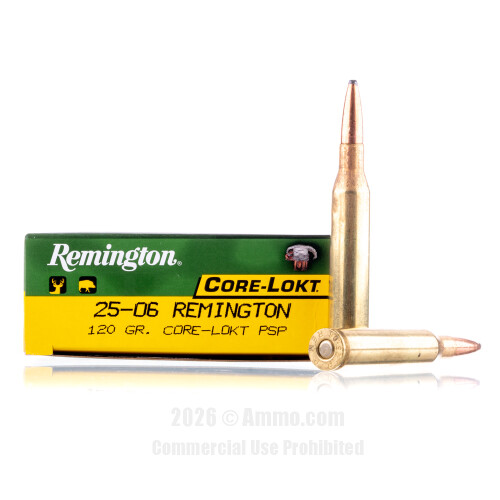
Buy .25-06 Rem online
Buy .25-06 online from Ammo Plug. We offer reliable access to .25-06 Remington ammunition with discreet worldwide delivery, no license required, and secure payment options including Bitcoin, bank transfer, Zelle, CashApp, and Western Union. Enjoy overnight shipping in the USA and Canada (1–2 days) or 3–5 days internationally, full tracking numbers, and our 30-day full refund or replacement policy. The .25-06 excels as a versatile, flat-shooting cartridge ideal for varmints, predators, deer, pronghorn, and even elk, delivering high velocity, moderate recoil, excellent wind resistance, and strong long-range performance. We prioritize 100% customer satisfaction, privacy, and discreet packaging for every order.
Price range: $700.00 through $3,200.00Select options This product has multiple variants. The options may be chosen on the product pageBuy 7mm-08 Rem online
Buy 7mm-08 online from Ammo Plug. We provide a reliable, hassle-free way to get 7mm-08 ammunition with discreet worldwide shipping, no license required, and fast delivery including 1-2 day overnight in the USA and Canada or 3-5 days internationally. Enjoy secure payment options such as Bitcoin, bank transfer, Zelle, CashApp, and Western Union, plus automatic tracking, full privacy protection, and our 30-day refund or replacement guarantee. This versatile cartridge excels for medium to large game hunting like deer and elk, offers mild recoil ideal for youth and recoil-sensitive shooters, delivers excellent accuracy and wind resistance with high-BC bullets, and shines in short-action rifles for lightweight, efficient performance across seasons and ranges up to 600 yards.
Price range: $650.00 through $3,000.00Select options This product has multiple variants. The options may be chosen on the product pageBuy .375 H&H online
Buy .375 H&H online from Ammo Plug. We deliver the legendary .375 H&H Magnum, a timeless cartridge since 1912, renowned for its versatility across continents and game types—from dangerous African species like buffalo and elephant to North American bears and elk. With deep-penetrating 300-grain solids for thick-skinned animals, expanding bullets for medium game, moderate recoil for quick follow-ups, and reliable belted-case performance, it remains a top choice for professional hunters and serious enthusiasts. We ensure discreet worldwide shipping (1–2 days USA/Canada, 3–5 days international), no license required, secure payments via Bitcoin, Zelle, CashApp, and more, full tracking, plus our 30-day refund or replacement guarantee for total confidence in every order.
Price range: $1,100.00 through $4,600.00Select options This product has multiple variants. The options may be chosen on the product pageBuy .357 Mag Rem online
Buy .357 Mag online from Ammo Plug for reliable, hassle-free access to this powerful revolver cartridge. We offer discreet worldwide shipping with no license required, overnight delivery options within the USA and Canada (1–2 days), and international delivery in 3–5 days. Enjoy secure payment methods including Bitcoin, bank transfer, Zelle, CashApp, and Western Union, plus full tracking on every order. We use plain packaging to protect your privacy, maintain a strict privacy policy, and back every purchase with our 30-day full refund or replacement guarantee. Our straightforward ordering process—browse, add to cart, checkout, manual payment, confirmation, and discreet delivery—ensures 100% customer satisfaction for self-defense, hunting, or target shooting needs.
Price range: $550.00 through $2,500.00Select options This product has multiple variants. The options may be chosen on the product page