No products in the cart.

Buy .38 Special online
Price range: $450.00 through $2,100.00
Buy .38 Special online from Ammo Plug. We provide reliable, discreet access to .38 Special ammunition with worldwide delivery, no license required, and fast overnight shipping options within the USA and Canada (1-2 days) or international (3-5 days). Enjoy secure payments through Bitcoin, bank transfer, Zelle, CashApp, or Western Union, plus every order includes a tracking number and our 30-day full refund or replacement guarantee. We focus on 100% customer satisfaction with plain packaging for complete privacy, a wide selection of FMJ, JHP, and other loads, and straightforward ordering from browsing to discreet delivery. Trust Ammo Plug for dependable .38 Special service tailored to your needs.
GET 10% DISCOUNT FOR ORDERS PAID VIA BITCOIN(BTC) OR USDT: USE CODE: “CRYPTO”
125 grains (1000)Rounds
$450.00
125 grains (2000)Rounds
$800.00
125 grains (5000)Rounds
$1,800.00
130 grains (1000)Rounds
$500.00
130 grains (2000)Rounds
$900.00
130 grains (5000)Rounds
$1,900.00
158 grains (1000)Rounds
$600.00
158 grains (2000)Rounds
$1,000.00
158 grains (5000)Rounds
$2,100.00
WE'RE A TEAM OF DEDICATED EXPERTS THAT OPERATE WITH 100% DISCRETION FROM DISCREET PACKAGING TO DELIVERY. THROUGH OUR TRUSTED CONNECTIONS WITH MAJOR CARRIERS, YOUR PACKAGE IS FULLY PROTECTED THROUGHOUT THE SHIPPING PROCESS AND GUARANTEED TO ARRIVE SAFELY EVERY TIME. TO MAINTAIN THIS HIGH LEVEL OF SERVICE AND SECURITY, WE ONLY SHIP THE MINIMUM ORDER QUANTITIES LISTED ABOVE.
Description
Where to buy .38 Special Online
We make it simple and secure to get .38 Special ammunition through our trusted online platform at Ammo Plug.
- We offer a wide variety of .38 Special rounds, including standard pressure and +P loads, suitable for revolvers used in self-defense, target shooting, and practice.
- Our inventory covers popular bullet types such as Full Metal Jacket (FMJ) for range training, Jacketed Hollow Point (JHP) for personal protection, and Lead Round Nose (LRN) or wadcutter options for classic performance.
- We ensure discreet packaging that protects your privacy during transit, with no external markings revealing the contents.
- Delivery happens quickly and reliably, with overnight options available within the USA and Canada for urgent needs.
- We accept flexible, secure payments including Bitcoin for added anonymity, bank transfers, Zelle, CashApp, and Western Union.
- Every order includes a tracking number so you can monitor progress from dispatch to arrival.
- Our 30-day policy allows full refund or replacement if any issue arises with your .38 Special shipment.
- We prioritize 100% customer satisfaction with straightforward ordering and strong privacy protections throughout the process.
How to order .38 Special Online
Ordering .38 Special from us follows a clear, user-friendly process designed for convenience and security.
- Browse our selection of .38 Special ammunition listings to find the bullet weight, type, and load that matches your revolver or intended use.
- Add your chosen .38 Special items to the cart, reviewing quantities and details before moving forward.
- Proceed to checkout where you enter basic shipping information while we handle discreet packaging automatically.
- Select your preferred manual payment method from Bitcoin, bank transfer, Zelle, CashApp, or Western Union at this stage.
- Complete the payment and wait for our confirmation email that verifies receipt and begins processing.
- Once confirmed, we prepare and ship your .38 Special order with a provided tracking number for real-time updates.
- Receive your package via discreet delivery, arriving in plain packaging to maintain complete privacy.
- Contact us within 30 days if needed for refund or replacement to ensure full satisfaction with your purchase.
Why choose Ammo Plug
We stand out as the most reliable online facilitator for .38 Special and other ammunition needs due to our focus on privacy, speed, and customer care.
- We specialize in discreet worldwide delivery, ensuring your .38 Special arrives safely without drawing attention.
- No license or special paperwork is required, making access straightforward for eligible buyers.
- Overnight discreet shipping within the USA and Canada gets your .38 Special to you in 1 to 2 days when selected.
- International orders typically arrive in 3 to 5 days, with the same emphasis on secure and unmarked packaging.
- We offer multiple trusted payment options like Bitcoin for privacy, plus Zelle, CashApp, bank transfer, and Western Union.
- Every purchase comes with a tracking number, giving you visibility and peace of mind during transit.
- Our 30-day full refund or replacement policy protects you if any concern arises with your .38 Special order.
- We commit to 100% customer satisfaction and strict privacy practices in every transaction.
Shipping Policy
We handle shipping for .38 Special with speed, discretion, and reliability to meet your needs effectively.
- Domestic orders in the USA and Canada qualify for overnight delivery, arriving in 1 to 2 business days when chosen.
- International shipping delivers .38 Special worldwide in 3 to 5 business days on average, depending on location and customs.
- All packages feature plain, unmarked exterior packaging to ensure complete discretion and privacy.
- We provide a tracking number with every shipment so you can follow its journey from our facility to your address.
- Orders process quickly after payment confirmation, with most .38 Special shipments dispatched within one business day.
- We use secure carriers experienced in handling sensitive items to minimize delays and risks.
- In rare cases of issues, our 30-day refund or replacement policy applies fully to shipping-related concerns.
- We aim for 100% satisfaction by prioritizing careful handling and timely updates throughout the delivery process.
Product specification table
| Specification | Details |
|---|---|
| Caliber | .38 Special |
| Bullet Diameter | .357 inches (9.1 mm) |
| Case Type | Rimmed, straight-walled brass |
| Case Length | 1.155 inches (29.3 mm) |
| Overall Length | 1.550 inches (39.4 mm) |
| Primer Type | Small pistol |
| Common Bullet Weights | 110 grains, 125 grains, 130 grains, 148 grains, 158 grains |
| Standard Pressure Limit | 17,000 psi (SAAMI) |
| +P Pressure Limit | 20,000 psi (SAAMI) |
| Typical Muzzle Velocity (158 gr LRN) | 755 ft/s (230 m/s) from 4-inch barrel |
| Typical Muzzle Energy (158 gr LRN) | 200 ft-lbs (270 J) |
| Typical Muzzle Velocity (130 gr FMJ) | 800-890 ft/s |
| Typical Muzzle Velocity (+P 125 gr JHP) | 900-1,000 ft/s |
| Common Bullet Types | FMJ (range/training), JHP (self-defense), LRN, LSWC, Wadcutters |
Product comparison table
| Feature | .38 Special | .357 Magnum |
|---|---|---|
| Bullet Diameter | .357 inches | .357 inches |
| Case Length | 1.155 inches | 1.290 inches |
| Overall Length | 1.550 inches | 1.590 inches |
| Max Pressure (SAAMI) | 17,000 psi (standard) / 20,000 psi (+P) | 35,000-36,000 psi |
| Typical 158 gr Velocity | 755-910 ft/s | 1,200-1,400 ft/s |
| Typical 158 gr Energy | 200-350 ft-lbs | 500-600+ ft-lbs |
| Recoil Level | Mild to moderate | Significantly higher |
| Common Use | Target, self-defense, practice | Hunting, self-defense, higher power |
| Compatibility | Fires in .357 Mag revolvers | Does not fire in .38 Special only guns |
| Availability | Widely available, lower cost | Available, higher cost |
Buy .38 Special online
Additional information
| Select Qty | 125 grains (1000)Rounds, 125 grains (2000)Rounds, 125 grains (5000)Rounds, 130 grains (1000)Rounds, 130 grains (2000)Rounds, 130 grains (5000)Rounds, 158 grains (1000)Rounds, 158 grains (2000)Rounds, 158 grains (5000)Rounds |
|---|
Related products
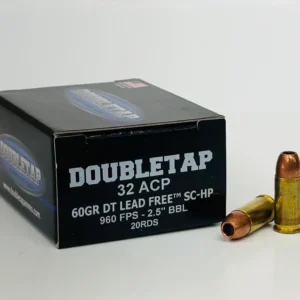
Buy .32 ACP online
Buy .32 ACP online from Ammo Plug. We provide a secure, discreet way to order .32 ACP ammunition worldwide with no license required. Enjoy overnight delivery in 1–2 days across the USA and Canada, or 3–5 days internationally, complete with full tracking numbers. Our plain packaging ensures complete privacy from start to finish. We accept flexible payments including Bitcoin, bank transfer, Zelle, CashApp, and Western Union. Every order includes our 30-day full refund or replacement guarantee for total customer satisfaction. We prioritize reliable access to .32 ACP for practice, self-defense, or collectors, backed by 100% privacy protection and efficient service.
Price range: $600.00 through $2,800.00Select options This product has multiple variants. The options may be chosen on the product pageBuy .45 Colt (Long Colt) online
Buy .45 Colt (Long Colt) online from Ammo Plug for reliable, discreet access to this versatile classic cartridge. We offer a wide selection of standard and +P loads suitable for revolvers, lever-action rifles, cowboy action, self-defense, hunting, and target shooting. Enjoy overnight discreet delivery in the USA and Canada (1–2 days) or international shipping (3–5 days) with full tracking and plain packaging. No license is required, and we accept secure payments via Bitcoin, bank transfer, Zelle, CashApp, or Western Union. Every order includes our 30-day full refund or replacement policy and a commitment to 100% customer satisfaction, ensuring privacy, speed, and trust for all your .45 Colt needs.
Price range: $850.00 through $3,800.00Select options This product has multiple variants. The options may be chosen on the product pageBuy 9mm Luger (9x19mm Parabellum) online
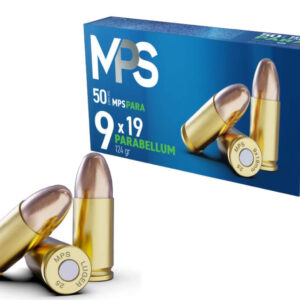
Buy 9mm Luger (9x19mm Parabellum) online from Ammo Plug for reliable, discreet access to the world's most popular pistol cartridge. We offer this versatile round—ideal for self-defense with jacketed hollow points, range practice with full metal jacket, suppressed shooting with subsonic loads, and duty use—in a wide selection without any license required. Enjoy discreet worldwide shipping, overnight delivery in the USA and Canada (1-2 days), international in 3-5 days, secure payments via Bitcoin, bank transfer, Zelle, CashApp, or Western Union, plus tracking numbers and our 30-day full refund or replacement guarantee. We prioritize 100% customer satisfaction through plain packaging, fast processing, and responsive support for every order.
Price range: $500.00 through $2,200.00Select options This product has multiple variants. The options may be chosen on the product pageBuy .357 SIG online
Buy .357 SIG online from Ammo Plug. We deliver reliable, discreet access to this high-velocity handgun cartridge worldwide with no license required. Enjoy overnight shipping (1-2 days) in the USA and Canada or 3-5 days internationally, complete with full tracking and discreet packaging for maximum privacy. Choose secure payments via Bitcoin, bank transfer, Zelle, CashApp, or Western Union—no credit cards accepted. Every order includes our 30-day full refund or replacement guarantee and a focus on 100% customer satisfaction. From self-defense JHP to practice FMJ loads, we make obtaining powerful .357 SIG ammunition simple, fast, and completely private.
Price range: $800.00 through $3,600.00Select options This product has multiple variants. The options may be chosen on the product page