No products in the cart.

Buy .44 Mag Rem online
Price range: $650.00 through $3,000.00
Buy .44 Mag online from Ammo Plug. We deliver reliable access to .44 Magnum ammunition with discreet worldwide shipping, no license required, and secure payment options including Bitcoin, bank transfer, Zelle, CashApp, and Western Union. Enjoy overnight delivery in 1–2 days within the USA and Canada, or 3–5 days internationally, complete with tracking numbers and full privacy protection. Our 30-day refund or replacement policy, along with 100% customer satisfaction focus, ensures confidence in every order. From powerful hunting loads to versatile defensive options, we handle discreet packaging and fast processing so your .44 Mag arrives safely and privately.
GET 10% DISCOUNT FOR ORDERS PAID VIA BITCOIN(BTC) OR USDT: USE CODE: “CRYPTO”
180 grains (1000)Rounds
$650.00
180 grains (2000)Rounds
$1,200.00
180 grains (5000)Rounds
$2,800.00
240 grains (1000)Rounds
$700.00
240 grains (2000)Rounds
$1,300.00
240 grains (5000)Rounds
$2,900.00
300 grains (1000)Rounds
$800.00
300 grains (2000)Rounds
$1,400.00
300 grains (5000)Rounds
$3,000.00
WE'RE A TEAM OF DEDICATED EXPERTS THAT OPERATE WITH 100% DISCRETION FROM DISCREET PACKAGING TO DELIVERY. THROUGH OUR TRUSTED CONNECTIONS WITH MAJOR CARRIERS, YOUR PACKAGE IS FULLY PROTECTED THROUGHOUT THE SHIPPING PROCESS AND GUARANTEED TO ARRIVE SAFELY EVERY TIME. TO MAINTAIN THIS HIGH LEVEL OF SERVICE AND SECURITY, WE ONLY SHIP THE MINIMUM ORDER QUANTITIES LISTED ABOVE.
Description
Where to buy .44 Mag Online
We make it simple and secure to purchase .44 Mag ammunition through our dedicated online platform at Ammo Plug, ensuring privacy and reliability every step of the way.
- We offer a wide variety of .44 Magnum loads suitable for revolvers, lever-action rifles, and other compatible firearms, covering common bullet weights from lighter high-velocity options to heavier deep-penetrating types.
- Our inventory includes jacketed soft point, hollow point, hard cast, and flat nose designs that perform well for different shooting needs like target practice, hunting medium to large game, or self-defense scenarios.
- We prioritize discreet packaging to protect your privacy during transit, with no external markings that reveal the contents.
- Worldwide delivery is available, allowing customers from various locations to order without geographic restrictions beyond standard shipping feasibility.
- We accept flexible payment methods such as Bitcoin, bank transfer, Zelle, CashApp, and Western Union for convenient and secure transactions.
- Every order includes a tracking number so you can monitor progress from dispatch to arrival.
- Our process ensures quick confirmation after manual payment review, leading to fast processing and dispatch.
- We maintain high standards for customer satisfaction with a straightforward ordering system designed for ease and reliability.
How to order .44 Mag Online
Ordering .44 Mag from us follows a clear, user-friendly process that emphasizes security, discretion, and speed from selection to delivery.
- Browse our selection of .44 Magnum ammunition options, reviewing available types and configurations to find what matches your firearm and intended use.
- Add your chosen items to the cart, where you can adjust quantities or review details before proceeding.
- Proceed to checkout and enter necessary shipping information while we handle the rest with privacy in mind.
- Select your preferred manual payment method from Bitcoin, bank transfer, Zelle, CashApp, or Western Union during the secure payment step.
- Complete the payment and await our confirmation, which typically occurs promptly after we verify the transaction.
- Once confirmed, we prepare your order for discreet packaging and assign a tracking number for real-time updates.
- Your package ships quickly, arriving in the promised timeframe with full discretion maintained throughout.
- Track delivery and contact us if any assistance is needed, knowing our support team is available to ensure a smooth experience.
Why choose Ammo Plug
We stand out as the most reliable online facilitator for .44 Mag and other ammunition needs by focusing on privacy, convenience, and customer-first policies.
- We provide discreet packaging and delivery to safeguard your privacy at every stage of the transaction and shipping process.
- No license is required for purchases, making access straightforward for eligible customers seeking .44 Magnum ammunition.
- Multiple payment options like Bitcoin, bank transfer, Zelle, CashApp, and Western Union offer flexibility without requiring credit cards.
- We deliver a tracking number with every order, allowing you to follow your package from our facility to your doorstep.
- Our 30-day full refund or replacement policy gives peace of mind in case any issue arises with your .44 Mag purchase.
- We achieve 100% customer satisfaction through reliable service, fast processing, and responsive support whenever needed.
- Worldwide shipping covers international customers efficiently, with clear timeframes tailored to location.
- We maintain a strong privacy policy that protects your personal and order information throughout all interactions.
Shipping Policy
We handle shipping for .44 Mag orders with speed, discretion, and reliability to ensure your ammunition arrives safely and promptly.
- Within the USA and Canada, we offer overnight delivery in 1 to 2 days for the fastest possible arrival after processing.
- International orders typically arrive in 3 to 5 days, depending on destination and customs clearance processes.
- All packages feature discreet packaging with no indications of contents to maintain complete privacy.
- We provide a tracking number immediately upon shipment so you can monitor progress in real time.
- Our commitment to 100% customer satisfaction includes careful handling to prevent damage during transit.
- Delivery occurs worldwide, with no unnecessary delays introduced by our team once the order is confirmed.
- We use trusted carriers selected for reliability and speed in handling sensitive shipments.
- In the rare event of any shipping concern, our 30-day policy allows for prompt resolution through refund or replacement.
Product specification table
| Specification | Details |
|---|---|
| Caliber | .44 Remington Magnum (.44 Mag) |
| Bullet Diameter | 0.429 inches (10.9 mm) |
| Common Bullet Weights | 180 gr, 200 gr, 220 gr, 240 gr (standard), 270 gr, 300 gr, up to 340 gr heavy loads |
| Case Type | Rimmed, straight |
| Primer Type | Large pistol |
| Maximum Pressure (CIP/SAAMI) | Approximately 36,000–40,600 psi |
| Typical Muzzle Velocity (revolver) | 1,200–1,500 fps (240 gr standard load) |
| Typical Muzzle Energy (revolver) | 900–1,200+ ft-lbs (depending on load) |
| Higher Velocity in Rifles | Up to 1,800–2,100 fps with longer barrels |
| Common Bullet Types | JHP, SJSP, Hard Cast LFN/GC, XTP, JSP, Monolithic |
| Primary Uses | Hunting medium/large game, self-defense, target shooting, lever-action rifles |
| Case Length | 1.285 inches |
| Overall Compatibility | Revolvers (e.g., S&W Model 29), lever rifles (e.g., Marlin 1894), carbines |
Product comparison table
| Feature / Aspect | .44 Magnum | .357 Magnum | .44 Special |
|---|---|---|---|
| Bullet Diameter | 0.429 inches | 0.357 inches | 0.429 inches |
| Typical Bullet Weight Range | 180–340 gr | 110–180 gr | 180–246 gr |
| Muzzle Velocity (typical) | 1,200–1,500 fps (revolver) | 1,200–1,500 fps | 750–900 fps |
| Muzzle Energy (typical) | 900–1,500+ ft-lbs | 500–800 ft-lbs | 300–500 ft-lbs |
| Primary Use Cases | Big game hunting, bear defense, powerful handgun/rifle | Medium game, self-defense, versatile | Target, plinking, milder recoil |
| Recoil Level | High | Moderate | Low to moderate |
| Power Comparison | Significantly higher energy | Lower than .44 Mag | Much milder, lower pressure |
| Suitable for Large Game | Yes (elk, bear, etc.) | Limited | No |
Buy .44 Mag online
The .44 Magnum is legendary for its hard-hitting power, making it excellent for hunting and heavy defensive use. Customers who buy 44 Mag online frequently seek other powerful handgun options. A strong complement is to buy 357 Mag online for versatile performance in the same revolver platforms.
Many also buy 45-70 Govt online when they want even more power for big game hunting. For everyday carry, buy 45 ACP online offers reliable stopping power in semi-automatic pistols.
Additional information
| Select Qty | 180 grains (1000)Rounds, 180 grains (2000)Rounds, 180 grains (5000)Rounds, 240 grains (1000)Rounds, 240 grains (2000)Rounds, 240 grains (5000)Rounds, 300 grains (1000)Rounds, 300 grains (2000)Rounds, 300 grains (5000)Rounds |
|---|
Related products
Buy 7mm Rem Mag online
Buy 7mm Rem Mag online from Ammo Plug. We offer a reliable, discreet way to purchase 7mm Remington Magnum ammunition with no license required and worldwide delivery. Choose from a wide selection of bullet weights (140–175+ grain) and types including polymer-tipped, bonded, soft point, and boat-tail designs for versatile big-game hunting, long-range shooting, and target use. Enjoy 1–2 day overnight delivery in the USA and Canada, 3–5 days internationally, discreet packaging, tracking numbers, multiple payment options (Bitcoin, bank transfer, Zelle, CashApp, Western Union), and our 30-day full refund or replacement policy. We prioritize 100% customer satisfaction, privacy, and fast, secure service for every order.
Price range: $750.00 through $3,300.00Select options This product has multiple variants. The options may be chosen on the product pageBuy .45-70 Govt online
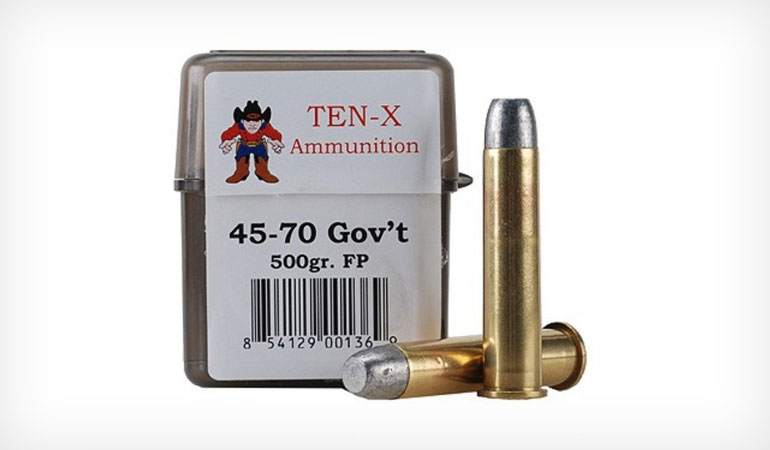
Buy .45-70 Govt online from Ammo Plug for reliable, hassle-free access to this legendary cartridge. We offer discreet worldwide shipping with no license required, overnight delivery in 1–2 days across the USA and Canada, and 3–5 days internationally. Enjoy complete privacy through plain packaging, full tracking numbers, and secure payment options including Bitcoin, bank transfer, Zelle, CashApp, and Western Union—no credit cards accepted. Every order includes our 30-day full refund or replacement guarantee and a commitment to 100% customer satisfaction. Whether for big-game hunting, dangerous game defense, lever-action shooting, or historical use, we make acquiring .45-70 Govt simple, fast, and confidential.
Price range: $850.00 through $3,800.00Select options This product has multiple variants. The options may be chosen on the product pageBuy .260 Rem online
Buy .260 Rem online from Ammo Plug. We provide reliable, discreet access to .260 Remington ammunition with no license required and worldwide delivery. Enjoy fast 1-2 day overnight shipping in the USA and Canada, or 3-5 days internationally, using secure payment options like Bitcoin, bank transfer, Zelle, CashApp, or Western Union. Every order includes tracking, plain unmarked packaging for complete privacy, and our 30-day full refund or replacement guarantee. We focus on 100% customer satisfaction, making it easy to browse, add to cart, checkout securely, and receive your .260 Rem ammo quickly and privately.
Price range: $700.00 through $3,200.00Select options This product has multiple variants. The options may be chosen on the product pageBuy .357 Mag Rem online
Buy .357 Mag online from Ammo Plug for reliable, hassle-free access to this powerful revolver cartridge. We offer discreet worldwide shipping with no license required, overnight delivery options within the USA and Canada (1–2 days), and international delivery in 3–5 days. Enjoy secure payment methods including Bitcoin, bank transfer, Zelle, CashApp, and Western Union, plus full tracking on every order. We use plain packaging to protect your privacy, maintain a strict privacy policy, and back every purchase with our 30-day full refund or replacement guarantee. Our straightforward ordering process—browse, add to cart, checkout, manual payment, confirmation, and discreet delivery—ensures 100% customer satisfaction for self-defense, hunting, or target shooting needs.
Price range: $550.00 through $2,500.00Select options This product has multiple variants. The options may be chosen on the product page